
Giving Good Days Winter Newsletter- 2016




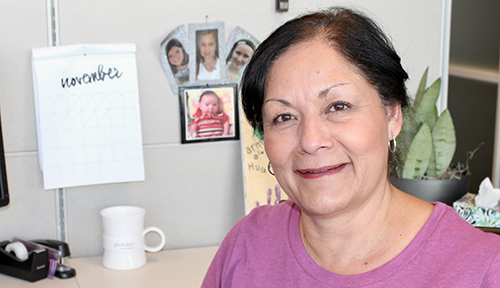
Yolanda is a Patient Care Specialist at Good Days who truly understands what it means to be affected by a life altering disease. Yolanda has Central Retinal Vein Occlusion (CRVO), a blockage of the main vein in the retina that causes vision to become blurry or, in severe cases like Yolanda’s, causes loss of vision. Yolanda lost sight in her left eye at age 34 because at the time there was no approved treatment for her condition. Her journey has given her a uniquely personal perspective to that of what many patients who reach out to Good Days experience. “Although I have learned to adapt to my disease over the years, I can still remember the fear and uncertainty that I felt when I first lost sight in my eye. The people who reach out to Good Days often feel the same way, and I am reminded of what I needed most during such a frightening time. Being a patient person and a good listener goes a long way to ease someone’s anxiety. And I am so thankful that I truly understand how it feels to be in their situation and can offer some hope and reassurance. If there’s a time when I can’t help with all of the needs they might have, I make sure to research and recommend other organizations that may be able to help,” said Yolanda. Recently, Yolanda spoke to a gentleman who could not see well enough to drive and depended heavily on others to transport him to and from his appointments. With Good Days’ assistance, he gained access to the treatments he needs to manage his disease—and he is now able to drive himself. “This job is about far more than helping people access medicine. We are able to play a part in giving people back their independence, their sense of hope, their health. That impact is truly incredible and overwhelmingly positive,” Yolanda said. Yolanda has been serving patients at Good Days for the past five years and her passion and empathy shines through with every patient interaction. This above-and-beyond approach to care is one of the factors that sets Good Days apart, and is the reason that the people we serve develop trusting relationships with our team members. The Good Days family grows every day and our Patient Care Specialists are our frontline ambassadors. Yolanda couldn’t be more proud. “We receive notes every year addressed to specific Patient Care Specialists thanking us. It is nice to know what we are doing has a profound impact on everyone we touch,” she said. “It makes the holidays that much more meaningful when you know you’ve made a difference in someone’s life. And it reminds me to be appreciative of what I still have in my life.” Good Days is grateful to have team members like Yolanda and also to have caring people like you who assist us by helping to raise awareness in the continued fight to assist patients get the support they need. Yolanda said it best: “It is nice to know what we are doing has a profound impact on everyone we touch.” MANAGING STRESS DURING THE HOLIDAYS You’ve made your list. You’re checking it twice. The problem is, your to-do list at the holidays feels as long as Santa’s nice and naughty list. There are parties to plan and attend, shopping, baking, cleaning and more.
It’s no wonder stress, and sometimes depression, tends to rear its ugly head during the holiday season. And as we know, a stressed mind and body is more likely to get sick. -Be realistic. The holidays don’t have to be perfect. As families change and grow, traditions and rituals often change. Choose a few to hold on to, and be open to creating new ones that help simplify things.
-Make a holiday budget. Before you go gift and food shopping, decide how much money you can afford to spend. Then stick to your budget. Don’t try to buy happiness. A couple of ways to stick to your budget: give homemade gifts or start a family gift exchange.
-Plan ahead. Set aside specific days for shopping, baking, visiting friends and other activities. Plan your menus and then make your shopping list. And make sure to line up help for party prep and cleanup.
-Learn to say no. Saying yes to every invite or volunteer job could leave you resentful and overwhelmed. Friends and colleagues will understand if you can’t participate in every activity. -Go for a walk. A brisk half-hour walk can decrease stress and anxiety.
-Get plenty of sleep. Don’t sacrifice sleep to fit in one more task. Getting enough sleep helps protect your mental and physical health.
-Do something that makes you laugh. Laughter reduces stress hormones and lifts your mood.
-Listen to music. Whether it’s your favorite holiday song or a top 10 hit, research shows that listening to music you love can calm you down and is good for your heart.
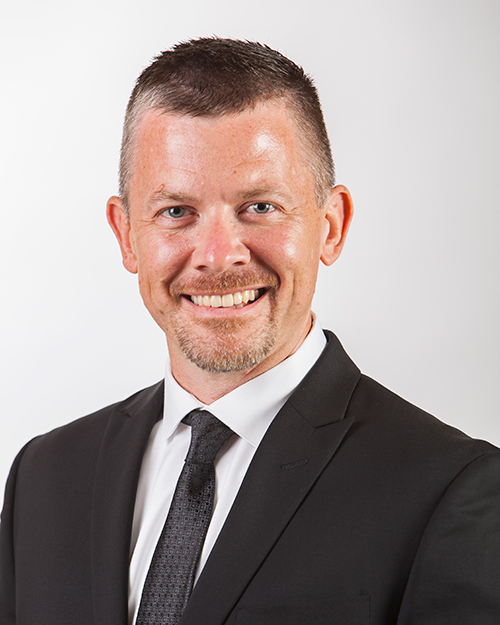
-Give back to someone in need. The holiday season is a great time to give back to others in need. Whether it’s a small act of kindness, such as holding a door for someone, or giving to a charity, your mood will be lifted to know you made a difference. Resources: GOOD DAYS IN THE NEWS After serving in leadership positions in multiple pharmacy business units throughout the U.S., including more than 19 years with Walgreens, this past month Randall Odebralski became the new Chief Operating Officer for Good Days.
I come from a humble background, our motto was to be happy for what you have and contribute where you can. A foundational piece of my upbringing was the importance of helping others and that has definitely stayed with me today.
As I moved through college, I decided to focus on health administration and almost by chance got a position with Walgreens. It was an organization that I enjoyed working for and learning from, and I stayed with them for 19 years. At Walgreens I gained experience in the business aspects of the healthcare industry, but outside of that – having the ability to impact a patient’s life and contribute to a better balance of life for an individual, touches a common thread between all people and makes it more than just work for me.
I was proud to join the team at Good Day, which drives and supports healthy initiatives with our team members, community and business partners. This includes contributing to community-wide health events, participating in patient advocacy support walks and other activities and speaking to promote patient access. I believe it is up to everyone to do what they can to have an impact both from an individual level and from an organizational level. In the grand scheme of things, we look at the complexity of the entire healthcare system. Our focus is to assist patients in obtaining required medication and contributing to making a person’s life better. Prices are outside of our control, and our focus needs to remain on the patient no matter what. Our commitment to the patient is that we will do what we can to remove barriers to care. The town I’m from, Dunkirk, New York, picked up the press release and it turns out, that one of our patients lives there. She has been serviced by Good Days since 2011-2012. She told my mom what an outstanding organization Good Days is and how much we have helped her when she had no other alternatives. She said my mom should be proud that her son was able to be part of such a special group of people.
I know that I’m proud of the amazing group of people I’m working with at Good Days. And I’m truly grateful to you for standing with us to help spread the word about assistance Good Days provides to people suffering from chronic diseases. The more people understand and become aware of what we do, the more people we can help! A LETTER FROM THE EXECUTIVE DIRECTOR As the year draws to a close, I like to reflect on all that Good Days was able to accomplish, thanks to the kindness of friends like you.
Yet still today there are far more people in need than dollars at hand for Good Days to help, which is why we continue to seek funding and assistance to meet the demand.
The partnerships we are forming with advocacy groups help us make great strides in this area. Which is why in 2017, we will push even harder to create relationships with even more advocacy groups, so we can provide additional support and services to those who look to us for help.
We will also utilize the relationships we build with these advocacy groups to help bring more awareness of the difficulty chronic disease sufferers face. We need our nation to more fully understand that many of these diseases have no prejudice. They affect the rich, the poor and people of all races. According to the CDC, chronic disease is the leading causes of death and disability in the U.S.— and one in four adults has two or more chronic conditions.
As long as there are statistics like these, Good Days must continue to do more. And your support helps move us in the right direction. When you spread the word about Good Days, and the importance of our work, you help give living testimony to the need for more donors and the funding it takes to help even more patients get the treatments they must have to fight their disease. Sincerely, Clorinda Walley, Executive Director Good DaysMEET YOLANDA
Her Own Chronic Health Condition Helps Put Her in Patients’ Shoes
TIPS TO KEEP YOU HEALTHY AND HAPPY
Here are a few things you can do to minimize the stress that accompanies the holidays:
-Make some time for yourself. Spending just 15 minutes alone, without distractions, may refresh you enough to handle everything you need to do. Find something that reduces stress by clearing your mind, slowing your breathing and restoring inner calm.
http://www.mayoclinic.org/healthy-lifestyle/stress-management/in-depth/stress/art-20047544
http://www.health.com/health/gallery/0,,20306655,00.html
https://www.nhlbi.nih.gov/health/health-topics/topics/sdd/why RANDIE ODEBRALSKI JOINS GOOD DAYS STAFF AS CHIEF OPERATING OFFICER
I attended a Good Days event a few years back and Dr. Tedd Mitchell, the president of Texas Tech University’s Health Sciences Center, was among the speakers. He nicely summed up this question of how health conditions shape our ability to do our work. The discussion was about the environment, genetics and behavior. The fact is some of it we can control, and some of it we cannot. Behavior we can control and to the extent possible we all must do our part.
No one asks the patient dying of cancer what six months can potentially give them for themselves, for their children and grandchildren, and for their legacy. Too often the human side of this is lost in the mix of statistics, figures, dollar signs and theories. The bottom line is: if no one is being an advocate for the patient, we are all losing.
Good Days is my focus now, and I’m honored to join an organization that makes a positive impact across the country in towns big and small. In fact, I knew it was a good sign when I got a call from my mom shortly after Good Days had posted a press release about me joining the organization. CLORINDA WALLEY
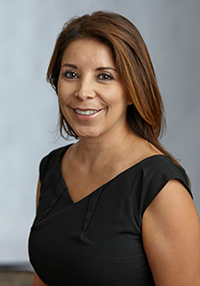
So far this year, we’ve helped more than 120,000 people get the medication they needed, get to their important medical appointments for treatment and gain access to the insurance coverage necessary to cover their disease state.
Through the generosity of our donors, we continue to expand our services to more fully meet the needs of people suffering with chronic disease.
This holiday season, whether you can give a gift yourself or ask a friend to make a gift for you, please know that every dollar donated can another patient in need. We want to make 2017 a year filled with even more hope and less pain than for more people than ever before — because more people than ever before need us to. 

Sign Up For Email Newsletter
Fill out the form below to get regular updates delivered straight to your inbox.